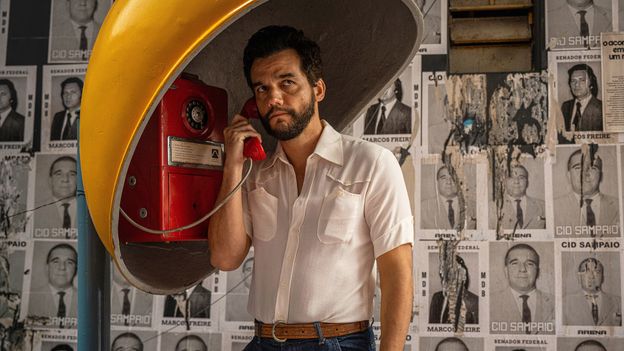
A Cinematic Time Machine: Unveiling The Secret Agent in 1977 Brazil
Prepare for a profound journey into the heart of 1977 Brazil, a nation gripped by the iron fist of military dictatorship, brought vividly to life in Kleber Mendonça Filho's ambitious neo-noir political thriller,
The Secret Agent. This film isn't merely a story; it's a meticulously crafted historical experience, an urgent and powerful narrative that transports viewers directly into a turbulent past where shadows held sway and truth was a dangerous commodity. From the director celebrated for his incisive social commentary and distinctive cinematic voice,
The Secret Agent promises an immersive dive into an era of profound political tension, personal peril, and the relentless pursuit of freedom.
A Journey Back to 1977 Brazil: The Setting and Its Gripping Atmosphere
Step into a meticulously recreated 1977 Brazil, where every sight, sound, and palpable feeling is designed to immerse you in the era's unique atmosphere. Kleber Mendonça Filho's
The Secret Agent excels as a cinematic time machine, capturing the essence of a nation under authoritarian rule. The film anchors much of its narrative in Recife, a city that becomes a character unto itself—vibrant yet stifled, brimming with everyday life while constantly overshadowed by the pervasive presence of the military dictatorship.
This historical backdrop is crucial for understanding the film's gravity. In 1977, Brazil was in the later stages of its military regime, a period characterized by widespread surveillance, political oppression, and a chilling suppression of dissent. The film masterfully weaves this historical reality into its fabric, showcasing how ordinary lives were irrevocably altered by extraordinary circumstances. You don't just watch the story unfold; you experience the oppressive humidity, the hushed conversations, and the omnipresent threat that defined existence for many Brazilians during this challenging time. It’s a compelling look at how a regime's mechanisms of control seep into the very fabric of society, affecting everything from personal relationships to the public's perception of truth.
The Man on the Run: Armando's Desperate Fight for Family and Truth
At the heart of
The Secret Agent is Armando, portrayed with compelling intensity by the acclaimed Wagner Moura. Once a respected university professor, Armando now carries the heavy burden of being a man on the run, targeted by the authoritarian Brazilian government. His journey back to Recife is fraught with immense risk, driven by a singular, powerful motivation: to reunite with his young son, Fernando (Enzo Nunes), who lives with his maternal grandparents. This personal quest for connection against a backdrop of grave danger forms the emotional core of the film.
Armando's existence is one lived in perpetual shadow, a clandestine life facilitated by an unlikely ally: Dona Sebastiana, an old Italian anarcho-communist who runs a refuge. Her character embodies the resilient spirit of resistance and provides a poignant contrast to the pervasive corruption that Armando navigates. With a death warrant hanging over his head, Armando is hunted by a powerful and insidious network of corrupt corporations, politicians, and police chiefs, all operating with impunity under the military dictatorship's protective wing. His struggle transcends a simple flight for survival; it becomes a desperate fight for identity, family, and the faint glimmer of justice in a world consumed by lies. The film expertly captures the psychological toll of living under constant threat, forcing Armando to make impossible choices in his unwavering determination to protect what little he has left. For a deeper look into his perilous journey, explore
On the Run in 1977 Brazil: The Secret Agent's Neo-Noir Political Fight.
Unmasking the Octopus: Corruption and Power in "The Secret Agent"
One of
The Secret Agent's most potent strengths lies in its unflinching depiction of systemic corruption, portraying it not as an isolated incident but as a sprawling, multi-tentacled organism that permeates every level of Brazilian society. From Armando's initial encounter with a local police bribe—forcing him to offer cigarettes in lieu of money—the film immediately establishes a world where legality is a mere suggestion and influence is currency.
The intricate web of power is personified by characters like Police Chief Euclides (Robério Diógenes), who governs Recife with the iron fist of a Martin Scorsese-esque gangster, his men wreaking havoc with the perceived legitimacy of police authority. Beyond the street-level thuggery, the film introduces Henrique Ghirotti (Luciano Chirolli), an influential businessman whose company wields significant sway within the government. Ghirotti's animosity towards Armando is complex, rooted in deeply ingrained aspects of Brazilian identity and culture—the North-South divide, socioeconomic disparities, and raw masculine pride. It is Ghirotti who eventually issues the death warrant on Armando, unleashing ruthless hitmen, Augusto (Roney Villela) and Bobbi (Gabriel Leone), further highlighting the private interests intertwined with state power.
A particularly surreal sequence, reminiscent of Luis Buñuel’s work, involves a bizarre "hairy leg" newspaper story used as a cover-up for police corruption. This almost absurd detail perfectly encapsulates the lengths to which the authorities would go to manipulate public perception and conceal their illicit activities. It’s a chilling reminder that in an authoritarian state, even the most outrageous lies can be peddled as truth. This exploration of pervasive deceit and the struggle against it is central to the film’s message. To further understand how the film meticulously dissects these issues, consider reading
The Secret Agent: Unmasking Corruption in Brazil's Authoritarian Past.
Filho's Masterful Vision: Neo-Noir, Satire, and Cinematic Prowess
Kleber Mendonça Filho's directorial hand in
The Secret Agent is nothing short of masterful, demonstrating impressive control over a vast and intricate narrative. He crafts a sprawling neo-noir landscape, characterized by its shadowy aesthetics, moral ambiguities, and a cynical undercurrent that questions the nature of power and reality. Filho draws clear inspiration from cinematic giants, evident in his approach to storytelling. Much like Robert Altman in films such as
Nashville, Filho introduces a rich tapestry of characters, dedicating time to develop their individual arcs and roles before skillfully weaving them into conflict and ultimately bringing them together in a compelling climax. This technique allows for a multi-faceted view of 1977 Brazil, moving beyond just Armando's personal struggle to paint a larger societal portrait.
The film's satirical elements, though subtle, pierce through the grim reality, questioning the grand narratives imposed by governments and corporations. The aforementioned "hairy leg" incident, for instance, offers a moment of darkly comedic surrealism, typical of Buñuel, that simultaneously lampoons the authorities' desperate attempts at cover-up and unnerves the audience with its sheer audacity. Filho’s ability to blend urgent political commentary with a "magical cinematic experience" is what makes
The Secret Agent truly stand out. He uses visual storytelling and atmospheric sound design to not only evoke a specific period but also to create a sense of lingering tension and psychological unease that resonates long after the credits roll. Viewers should pay close attention to the intricate character work and the deliberate pace, as these are key to appreciating the depth of Filho's vision and the powerful message he conveys.
Conclusion
The Secret Agent is far more than a historical thriller; it's a profound cinematic commentary on authoritarianism, corruption, and the enduring human spirit in the face of oppression. Kleber Mendonça Filho delivers an urgent and powerful story, masterfully blending the gripping tension of a neo-noir with the expansive character development of a social epic. Through Armando's desperate quest for family and truth amidst a labyrinth of deceit, the film forces us to confront uncomfortable questions about power, accountability, and the very fabric of reality. It serves as a vital reminder of history's lessons and prompts a timeless reflection: in our own complex world, "Are we living a big lie?" This film is not just an escape into the past; it’s a mirror reflecting enduring struggles that continue to shape our present.