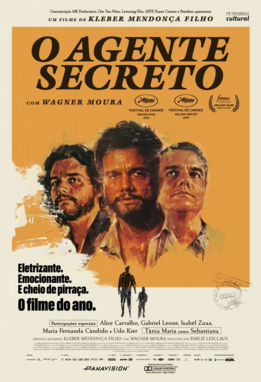
On the Run in 1977 Brazil: The Secret Agent's Neo-Noir Political Fight
Step into a meticulously crafted cinematic time capsule and brace yourself for the intense atmosphere of 1977 Brazil. Kleber Mendonça Filho's sprawling neo-noir political thriller, The Secret Agent, doesn't just tell a story; it transports you, immersing viewers in the sights, sounds, and palpable tension of a nation under the grip of a military dictatorship. At its heart is Armando (portrayed with compelling depth by Wagner Moura), a former university professor whose intellectual dissent has made him an enemy of the authoritarian government, forcing him into a perilous existence on the run.
As the narrative of The Secret Agent unfolds, Armando makes the dangerous journey to Recife, driven by the profound desire to reunite with his son, Fernando (Enzo Nunes), who lives with his in-laws. This act of paternal love is fraught with immense risk, as Armando carries a death warrant on his head, hunted by powerful, corrupt corporations, politicians, and police chiefs who wield significant influence within the regime. He finds precarious refuge in a safe house run by Dona Sebastiana (Tânia Maria), an old Italian anarcho-communist, an unlikely ally in a city teeming with surveillance and peril. Filho’s vision is not merely a film; it is a magical cinematic experience that doubles as an urgent and powerful commentary on truth, survival, and the enduring fight against oppression. To truly appreciate the rich tapestry woven by Filho, delve deeper into The Secret Agent: Kleber Mendonça Filho's 1977 Brazilian Political Thriller.
A Masterclass in Neo-Noir Storytelling: Brazil's Dark Past Unveiled
The Secret Agent stands as a testament to ambitious filmmaking, showcasing Kleber Mendonça Filho's impressive control over a vast and intricate narrative. This is not merely a tale of Armando's desperate attempts to reunite with his son and flee the country; it is an expansive portrait of Brazil in 1977, artfully interwoven with threads that connect its past to the present. Filho, drawing inspiration from masters like Robert Altman—particularly the ensemble-driven approach seen in films such as Nashville—introduces a diverse array of characters. Each individual is given time to develop, their roles meticulously built before their paths inevitably converge in a gripping climax.
The film masterfully employs neo-noir conventions to enhance its political themes. Shadows become omnipresent metaphors for the hidden dangers and moral ambiguities of the era. Armando's journey is steeped in the genre's classic elements: a protagonist thrust into a world of corruption and paranoia, forced to navigate a treacherous landscape where trust is a luxury he can ill afford. From the moment Armando is introduced, forced to offer his cigarettes as a bribe to local police because he has no money, the pervasive theme of corruption under an oppressive political system is starkly established. This constant pressure highlights the everyday struggles of ordinary citizens under authoritarian rule, making The Secret Agent a deeply resonant experience.
Insight for Viewers: Pay close attention to the film's visual language. Filho uses framing, lighting, and shadow to emphasize themes of surveillance and paranoia. The architecture of Recife often feels like a character itself, reflecting the suffocating grip of the state.
The Tangled Web of Corruption: Power, Greed, and Deceit in 1977 Brazil
Recife, as depicted in The Secret Agent, is a city operating under the shadow of a ruthless police force, epitomized by Chief Euclides (Robério Diógenes). His portrayal evokes the raw, visceral power of a Martin Scorsese-esque gangster, with his men wreaking havoc throughout the city, often under the guise of official police authority. The film presents vivid, disturbing examples of this systemic corruption, often with a surreal edge. One memorable sequence, reminiscent of Luis Buñuel’s absurdist style, centers on a "hairy leg" cover story in the newspaper—a bizarre diversion designed to distract the populace from deeper police corruption. This bizarre incident perfectly illustrates the lengths to which the authorities will go to control the narrative and conceal their misdeeds, leaving viewers to ponder the unsettling question: "Are we living inside a big lie?"
Beyond the police, the film delves into the insidious influence of powerful business figures. Henrique Ghirotti (Luciano Chirolli) runs an influential company and leverages his power for personal gain. It is Ghirotti who ultimately issues the death warrant on Armando, driven by a complex mix of reasons intrinsically tied to Brazilian identity and culture. The socio-economic gap between the Northern-born Armando and the Southern-based Ghirotti, coupled with simple masculine insecurity and pride, fuels Ghirotti's ire, allowing him to weaponize his considerable influence within the government against The Secret Agent. The subsequent hiring of hitmen, Augusto (Roney Villela) and Bobbi (Gabriel Leone), further underscores the film's gritty realism and the existential threat facing Armando. For a deeper understanding of the regime's tactics, explore The Secret Agent: Unmasking Corruption in Brazil's Authoritarian Past.
Fact: The Brazilian military dictatorship, which lasted from 1964 to 1985, was characterized by extensive censorship, political repression, and human rights abuses, making the backdrop of The Secret Agent chillingly authentic.
Beyond the Chase: Exploring Deeper Themes and Cinematic Influences
While the immediate thrill of Armando's escape and his pursuit of family forms the driving pulse of The Secret Agent, Filho's ambition extends far beyond a simple chase narrative. The film deftly uses Armando's personal plight to paint a comprehensive canvas of Brazil in 1977, meticulously crafting a world where surveillance is omnipresent and personal freedom is a luxury. The narrative's strength lies in its ability to connect these historical events to contemporary struggles, making the film incredibly resonant for modern audiences who may recognize echoes of political manipulation and authoritarian tendencies in their own times. This historical depth and contemporary relevance are key to understanding the film's lasting impact.
Filho's homage to cinematic influences like Altman and Buñuel is evident in the film's structure and style. Like Altman, he allows for a multi-perspective narrative, building an ensemble cast whose individual stories eventually intertwine, creating a rich tapestry of societal interactions under pressure. The Buñuelian surrealism, exemplified by the "hairy leg" sequence, serves not just as an artistic flourish but as a powerful metaphor for the absurdity and irrationality that can flourish under totalitarian regimes. These elements combine to create a deeply layered viewing experience that rewards careful attention.
Practical Tip: When watching The Secret Agent, consider how seemingly disparate plotlines or character interactions contribute to the broader commentary on Brazilian society and politics. The film often reveals its most profound insights through subtle details and indirect storytelling.
Why The Secret Agent Resonates Today: A Timeless Struggle for Truth
The Secret Agent is more than a historical drama; it's a powerful and urgent narrative that transcends its specific time and place. The film's exploration of governmental overreach, corporate influence, and the struggle for individual truth against a backdrop of organized deception remains strikingly relevant in today's global political landscape. As societies worldwide grapple with issues of misinformation, state surveillance, and challenges to democratic institutions, The Secret Agent serves as a poignant reminder of the vigilance required to protect freedom and justice.
At its core, the film’s enduring power lies in its deeply human story: a father’s desperate love for his son, and his refusal to be silenced or disappear into the shadows. This personal fight for dignity and connection against overwhelming odds elevates The Secret Agent from a mere thriller to a profound meditation on resilience. Kleber Mendonça Filho has crafted a truly magical cinematic experience that not only transports viewers to a pivotal moment in Brazilian history but also compels them to reflect on the timeless struggle for truth, justice, and the courage to live authentically, even when on the run.
Conclusion
Kleber Mendonça Filho’s The Secret Agent is a compelling, masterful neo-noir political thriller that plunges audiences into the heart of 1977 Brazil. Through the perilous journey of Armando, a professor turned fugitive, the film exposes the intricate web of corruption, surveillance, and repression that characterized the military dictatorship. With its rich character development, evocative atmosphere, and profound thematic depth, The Secret Agent offers both a thrilling cinematic experience and a vital historical commentary. It’s a powerful reminder that the fight for truth and freedom, whether personal or societal, often demands the greatest courage, echoing its urgent message across decades and cultures.